
Licence plate recognition
The camera reads the licence plate, the PARQ system turns it into a parking session. Parking without a ticket, in car parks, multi-storey and underground.
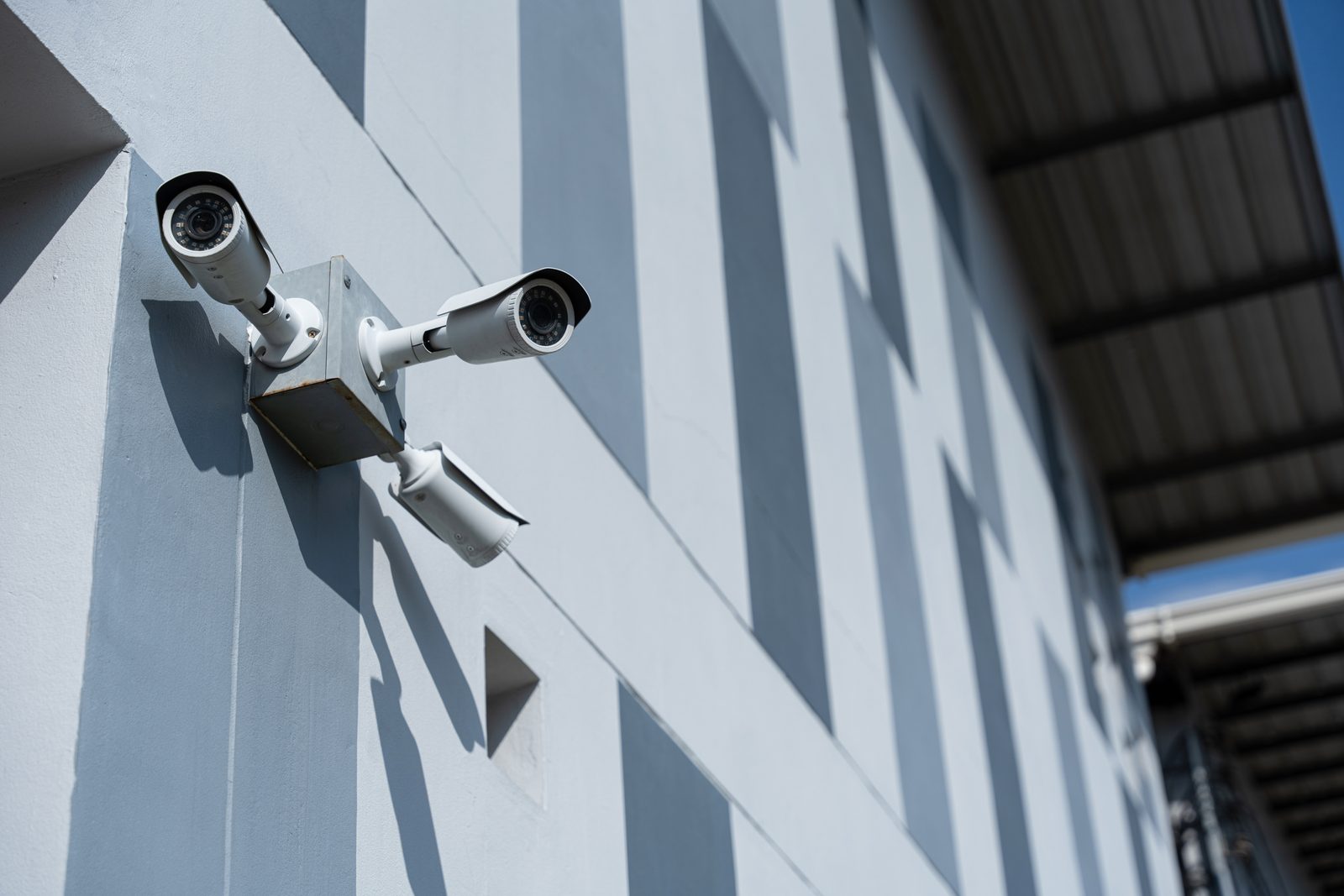
What is licence plate recognition?
Licence plate recognition is the automatic capture of vehicle licence plates by camera. The camera at the entrance records the licence plate and converts it into text. In the parking system, the licence plate thereby becomes the authorisation: entry and exit each get a timestamp, the time in between is the parking duration. Tariff, payment and authorisation are based on this. Internationally, the method is called “Automatic number plate recognition” (ANPR) or “License plate recognition” (LPR); in German it is also referred to as Nummernschilderkennung or Kennzeichenerfassung – the same technology is meant. For you as the operator of the site, this means the system itself checks entry, parking duration and authorisation, without a ticket and without a parking disc, on the car park, in the multi-storey car park and in the underground car park. Whether the entrance stays open or a barrier limits access is for you to decide for each entrance.
This is how a parking session with licence plate recognition runs.
Camera, in-ground sensor or barrier.
Each of the three technologies has its place. What suits your car park or multi-storey car park depends on entrances, user groups and how much technology is to go into the ground.
How much effort is needed on site?
What do running costs amount to?
Do drivers have to stop?
Where are the limits?
| Licence plate recognition | In-ground sensors | Barrier | |
|---|---|---|---|
| How much effort is needed on site? | Low, only cameras are installed at the entrances | Installation per parking space, intervention in the surface | Structural access, mechanics and ticket machine |
| What do running costs amount to? | Little, there are hardly any parts that wear out | Battery replacement and maintenance per sensor | Maintenance of the mechanics, faults in operation |
| Do drivers have to stop? | No, they drive straight through | No, they do not notice anything | Yes, take a ticket and wait |
| Where are the limits? | Covered or dirty licence plates need a fallback | Occupancy yes, vehicle no: authorisations cannot be checked this way | Queuing at peak times, a failure blocks the entrance |
What matters at the entrance.
Where a camera alone is not enough.
A camera captures every vehicle, but it cannot stop any of them. If an entrance really has to stay closed, for a level reserved for tenants for example, a barrier is added. The licence plate recognition stays the same.
Licence plate and barrierThe hardware for it.
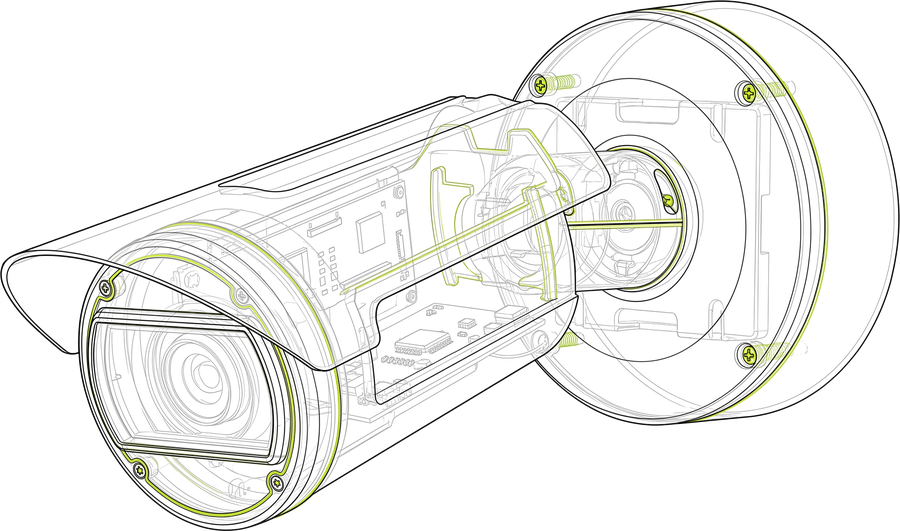 Camera C1Cameras with licence plate recognition for entry and exit, connected via the mobile network.
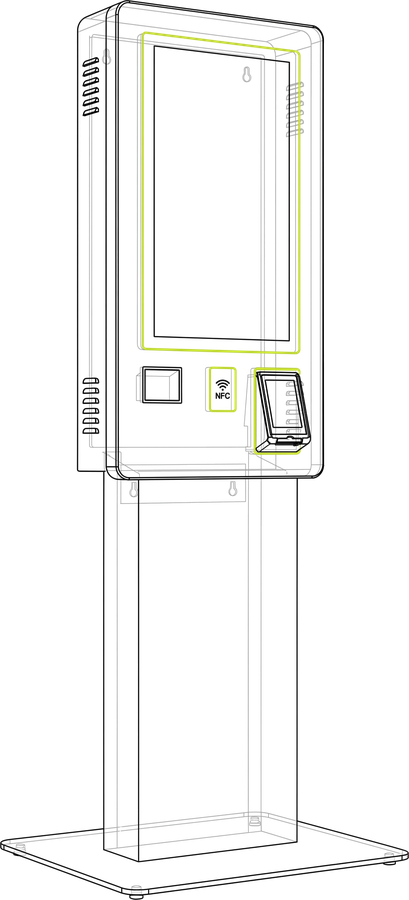 PARQ Automat A1/A2Pay by entering the licence plate, with card, contactless or Apple/Google Pay, and with the PARQ Automat A2 also with cash.
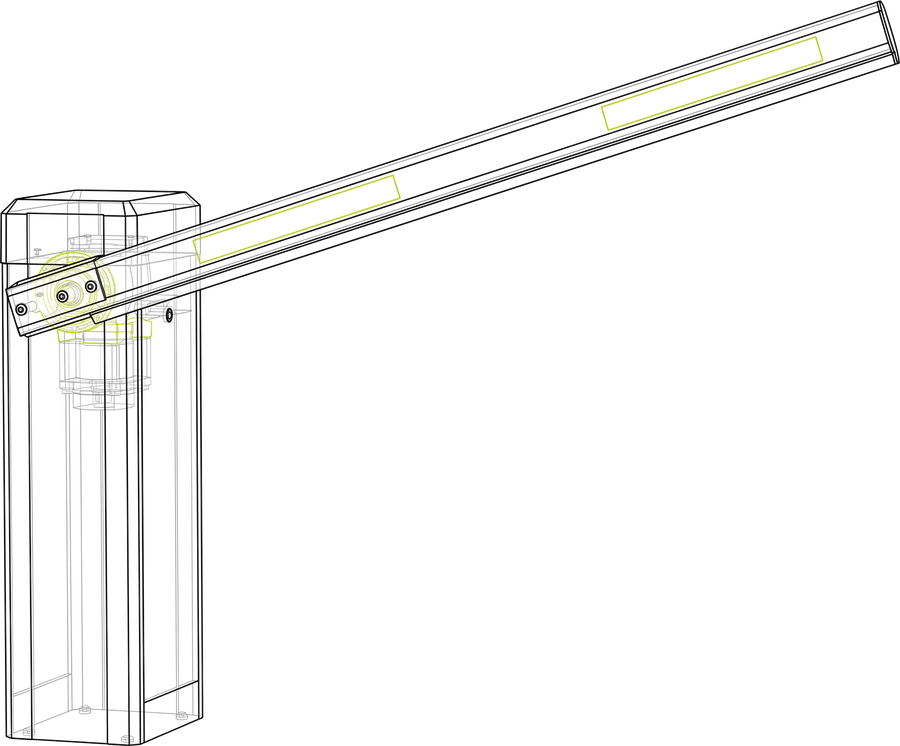 PARQ Barrier B1A barrier that opens via the licence plate, without a ticket.
More on the technology.
Questions about licence plate recognition.
In substance, none. ANPR stands for Automatic Number Plate Recognition, LPR for License Plate Recognition. Both denote the automatic capture of licence plates by camera. ANPR is more common in Europe, LPR in North America. In German the same method is called Kennzeichenerkennung, Kennzeichenerfassung or Nummernschilderkennung.
The licence plate and the time of entry and exit, nothing more. No faces, no vehicle occupants, no continuous video recording. Transmission is encrypted, data is stored for as long as it is needed for billing and proof, and deleted afterwards. Access in the portal depends on roles, not everyone sees every session.
Yes. The cameras work independently of daylight and read licence plates by day, by night and in any weather. Poor light isn't a problem either. What matters is the position at the entrance, so the licence plate sits cleanly in the frame. We clarify this in advance at your site, before the equipment is installed.
No. Entry and parking duration are recorded via the licence plate; a barrier is not needed for this. It makes sense where an entrance really needs to stay closed, for example for quotas, staff spaces or a level reserved for tenants. It can then be linked to the same recognition and opens for authorised licence plates.
Yes. Especially on a small area, every outside parker takes up a noticeable share of the spaces, and licence plate recognition shows who is parked for how long. Authorised users such as guests or staff park according to your rules, for example free of charge, while everyone else is recorded. No staff are needed for patrols to do this.