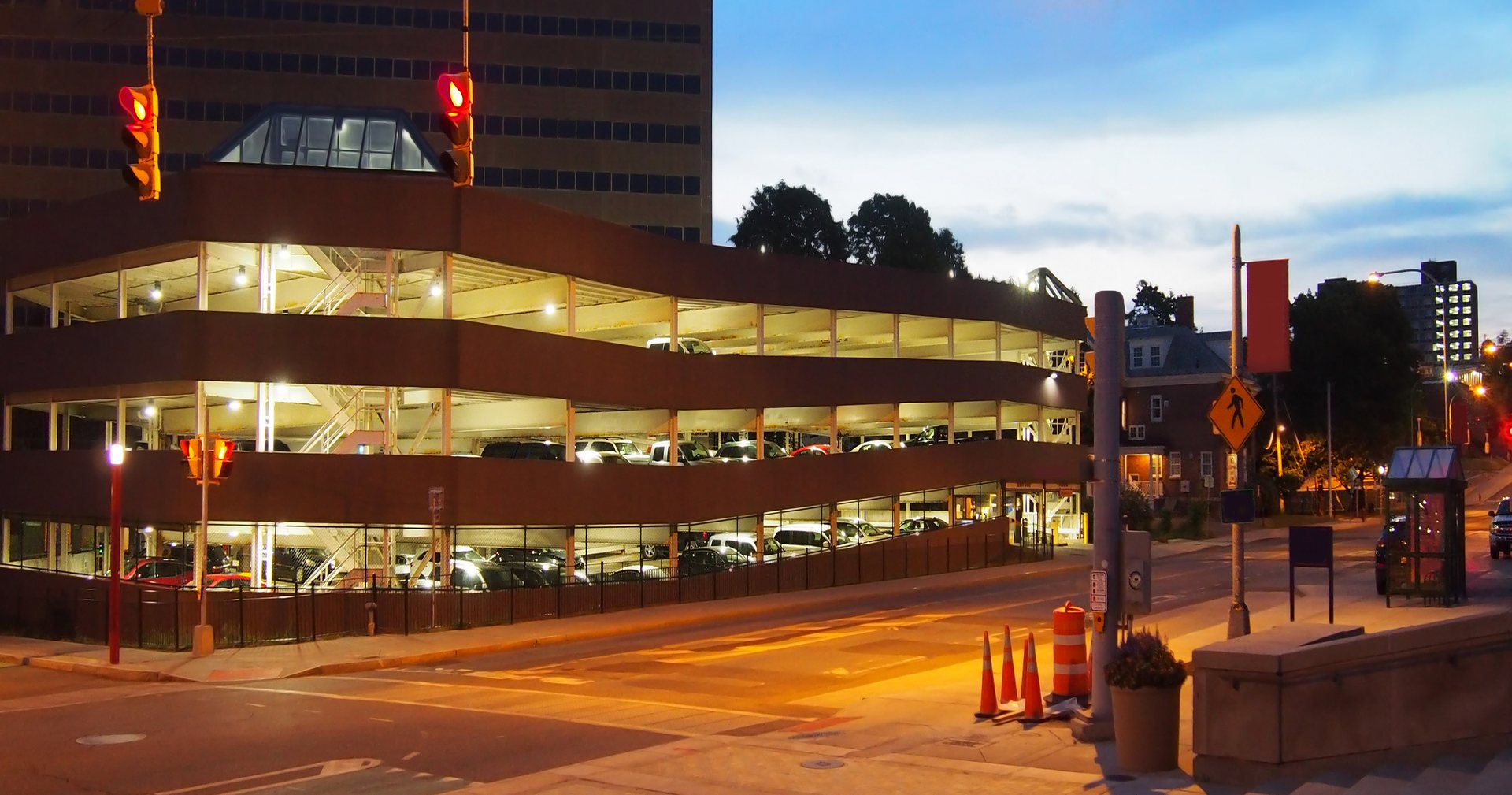

Taking on parking management yourself means: you decide who may park on your site and for how long and what parking costs, and you run the site with your own parking system.
Many owners of parking areas eventually face the question of whether to hand over operations or take them in hand themselves. With a parking system from PARQ, both remain with you: what applies on the site and what it earns. PARQ supplies cameras, portal and payment methods; you run the operation.
- Who it is for
- Anyone with their own car park, such as local authorities, shopping centres, hotels, clinics, municipal utilities or residential complexes
- You decide
- Tariffs, maximum parking duration, time windows and who parks free of charge
- Technology
- Cameras with licence plate recognition, with barrier, pay station and screen on request
- Pay
- Via app, QR code or online afterwards, at the pay station on request
- Revenue
- Flows to you
- Start
- Usually around 30 days after the order
Why manage the site yourself?
Whoever manages parking themselves decides for themselves. You set the rules and change them whenever you like, such as when opening hours change or an event is coming up. If parking costs something, the revenue stays with you.
On top of that comes the data: you see for yourself how your site is used, when it is full and what it earns. Decisions on tariffs or authorisations are then based on your own figures.
What you set on your site
You set the maximum parking duration, time windows, tariffs and authorisations yourself in the PARQ Portal. An example: the first half hour is free, after that each hour costs €1.50, up to a maximum of €10 per day. Hotel guests and employees are authorised via their licence plate and park free of charge. What your rules look like is up to you.
If parking is to remain free, the system ensures that your rules are observed; in the industry this is called enforcement. If it is to cost something, that is management. Both can be set differently for each site.
Which technology goes on the site
Cameras with licence plate recognition capture the licence plate on entry and exit. The entrance usually stays open, and drivers enter and exit without stopping. A barrier is only installed where access is to be strictly limited, such as for a fixed quota. Existing barriers can be connected.
The devices are connected via mobile network. You can buy, lease or rent the hardware.
How drivers pay and what happens in the event of violations
Drivers pay by app, by QR code on the sign or online afterwards, in each case using the licence plate. A pay station can be added on request, with or without cash.
Anyone who does not pay can pay online within 48 hours. After that, the system records the violation and automatically transmits it via an interface to a service provider for violation processing. You do not have to write to anyone yourself.
What you see in the portal
In the portal you see every parking session, every payment and outstanding claims live. The reports show occupancy, parking duration, arrivals and departures and revenue per site, and there is much more data than this. Via open interfaces, it goes to your own systems, such as Power BI, Microsoft 365 and much more.
How the changeover works
In the configurator you enter your site step by step and see a price range as an estimate. After that, we get in touch for an initial discussion and plan the site together with you: where the cameras go, whether a barrier is needed and which payment methods apply.
The technology arrives preconfigured, is installed and is usually up and running around 30 days after the order. From then on, you control rules, tariffs and authorisations yourself in the portal.
What your own parking system costs
The costs depend mainly on the number of entrances and exits, as well as barriers, pay stations and screens. The software is added as a monthly usage fee. In the configurator you work through your site in a few minutes; you receive the details by email.